The convergence of 5G and IoT represents one of the most transformative technological shifts of our era. 5G’s ultra-low latency and massive bandwidth fundamentally reshape how billions of connected devices communicate, enabling real-time responsiveness at unprecedented scale. Understanding this relationship is critical for technology leaders and investors alike—the AMD surged past $300 on MI450 hype — the numbers behind the rally reflects investor confidence in semiconductor companies powering this infrastructure buildout.
The financial markets are already pricing in this transformation. Companies investing in 5G infrastructure command significant valuations, while those integrating IoT into their operations see measurable efficiency gains. For investors seeking to understand the broader market mechanics, learning how equity markets actually work under the hood provides essential context for evaluating technology sector valuations. Meanwhile, Netflix’s $25B buyback: what share repurchases actually do for investors illustrates how mature tech platforms deploy capital in evolving market conditions—a pattern relevant to understanding 5G-IoT investment cycles.
5G in Financial Trading Infrastructure
Explore how 5G technology revolutionizes financial trading infrastructure with ultra-low-latency connectivity enabling real-time market operations. From algorithmic trading platforms to global market integration, discover how 5G's reliability and speed transform the backbone supporting modern financial systems.
Related market signal: Robinhood fintech platform struggles amid account cost pressures.
Read MoreCybersecurity in the Age of 5G and IoT

Explore the critical cybersecurity challenges and strategies in 5G-enabled IoT environments. Device security, network protection, and data privacy become paramount as billions of connected devices exchange information at unprecedented speeds. Discover how to navigate the evolving threat landscape to safely harness the transformative power of 5G and IoT technologies.
Edge Computing: Supercharging 5G-Powered IoT
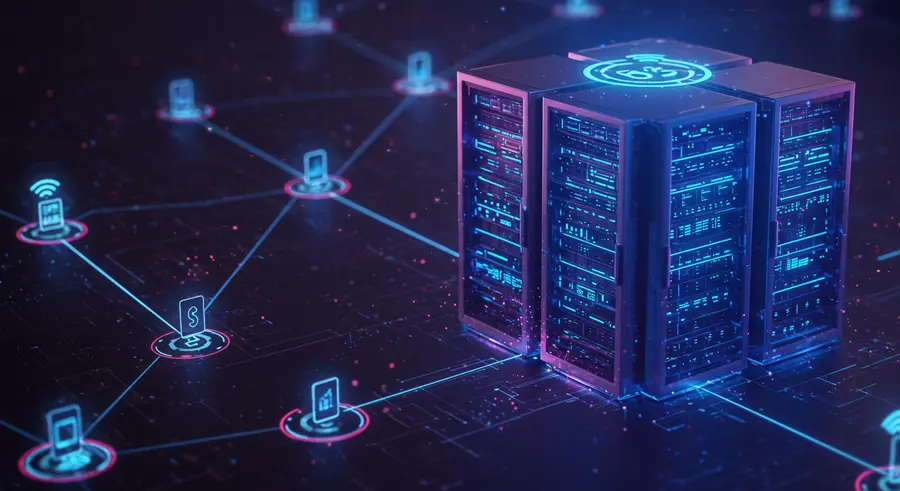
Dive into how edge computing revolutionizes 5G-enabled IoT by processing data closer to its source. Real-time responsiveness, reduced latency, and optimized bandwidth define this transformation across smart manufacturing, autonomous vehicles, and industrial automation. When combined with intelligent AI shepherd orchestration, edge computing enables autonomous systems to make critical decisions instantaneously.
5G Network Architecture and Core Components
Explore the technical foundation of 5G networks, from disaggregated RAN architecture to service-based core networks. Learn how network slicing, Multi-Access Edge Computing, and cloud-native design enable the performance and flexibility required for advanced IoT deployments across diverse use cases.
Read MoreNew Explainers
Investor Psychology: Why Smart People Make Costly Mistakes — Cognitive biases, crowd dynamics and the lessons of the GameStop mania.
Bonds and Fixed Income: The Stabiliser in Your Portfolio — Bonds and Fixed Income: The Stabiliser in Your...
Reading the Economy: GDP, Inflation and the Business Cycle — Reading the Economy: GDP, Inflation and the Business...
Latest Reading
The 2026 Tech IPO Wave: Cerebras, Figma and What Comes Next — The 2026 Tech IPO Wave: Cerebras, Figma and...
Fintech Disruption as an Investment Opportunity: Reading the Signals — Fintech Disruption as an Investment Opportunity: Reading the...
What Makes 5G Essential for IoT
The rollout of 5G networks represents a paradigm shift in connectivity that addresses fundamental limitations of previous generations. Ultra-low latency—achieving sub-10 millisecond response times—enables real-time control of remote devices and autonomous systems. This is paired with massive bandwidth capacity supporting gigabit-speed data exchange across connected ecosystems. The combination of enhanced reliability, with 99.999% uptime specifications suitable for mission-critical infrastructure, and sophisticated network slicing enables organizations to tailor connectivity to specific application requirements without shared interference. Energy efficiency improvements through advanced modulation and device sleep modes extend battery life for IoT endpoints, making widespread deployment economically viable.
These technical capabilities translate directly into market opportunity. SpaceX's $60B Cursor option and the new AI-software convergence trade demonstrates how infrastructure and software integration drives valuation in the connected economy. Similarly, strategic infrastructure partnerships reflect the Nebius eyes AI21 Labs in a full-stack AI infrastructure push, showing how companies are vertically integrating to capture value across the 5G-IoT stack.
Real-World Applications and Strategic Implications
Smart cities leverage 5G-IoT integration for intelligent traffic management, environmental monitoring, and emergency response systems. Industrial facilities deploy connected sensors and predictive maintenance across manufacturing floors. Autonomous vehicles rely on millisecond-precision communication networks. Remote healthcare providers transmit real-time patient data for immediate diagnosis and intervention. Each vertical market benefits uniquely from 5G's combination of speed, reliability, and capacity, creating differentiated competitive advantages for early adopters.
Geopolitical factors increasingly shape investment in connected infrastructure. the Strait of Hormuz blockade and its ripple effects on global markets underscores how physical infrastructure disruptions affect energy and supply chains globally—a reality that motivates investment in resilient, distributed 5G-IoT networks. For those managing portfolios exposed to these infrastructure shifts, understanding reading financial statements without an accounting degree becomes essential for evaluating which companies are genuinely capturing value versus simply riding market sentiment.
Challenges, Investment Patterns, and the Path Forward
Despite tremendous potential, 5G-IoT adoption faces significant obstacles. Security vulnerabilities emerge as attack surfaces expand exponentially. Regulatory frameworks lag technological advancement across jurisdictions. Infrastructure costs remain substantial in rural regions, creating digital divides. Interoperability standards continue evolving across competing implementations, fragmenting the market.
The competitive landscape reflects these challenges. Organizations navigating 5G-IoT investments must focus on three dimensions: technical feasibility, security posture, and operational scalability. Technical feasibility involves understanding edge computing architectures and device endpoint management. Security posture requires multi-layer defense strategies addressing device, network, and data protection simultaneously. Operational scalability demands infrastructure design capable of managing exponential growth in connected devices and data volumes. Companies that demonstrate mastery of all three—as evidenced by investor confidence reflected in market valuations—will gain competitive advantage in the connected economy.